The Tristix-Origami Interweaving System
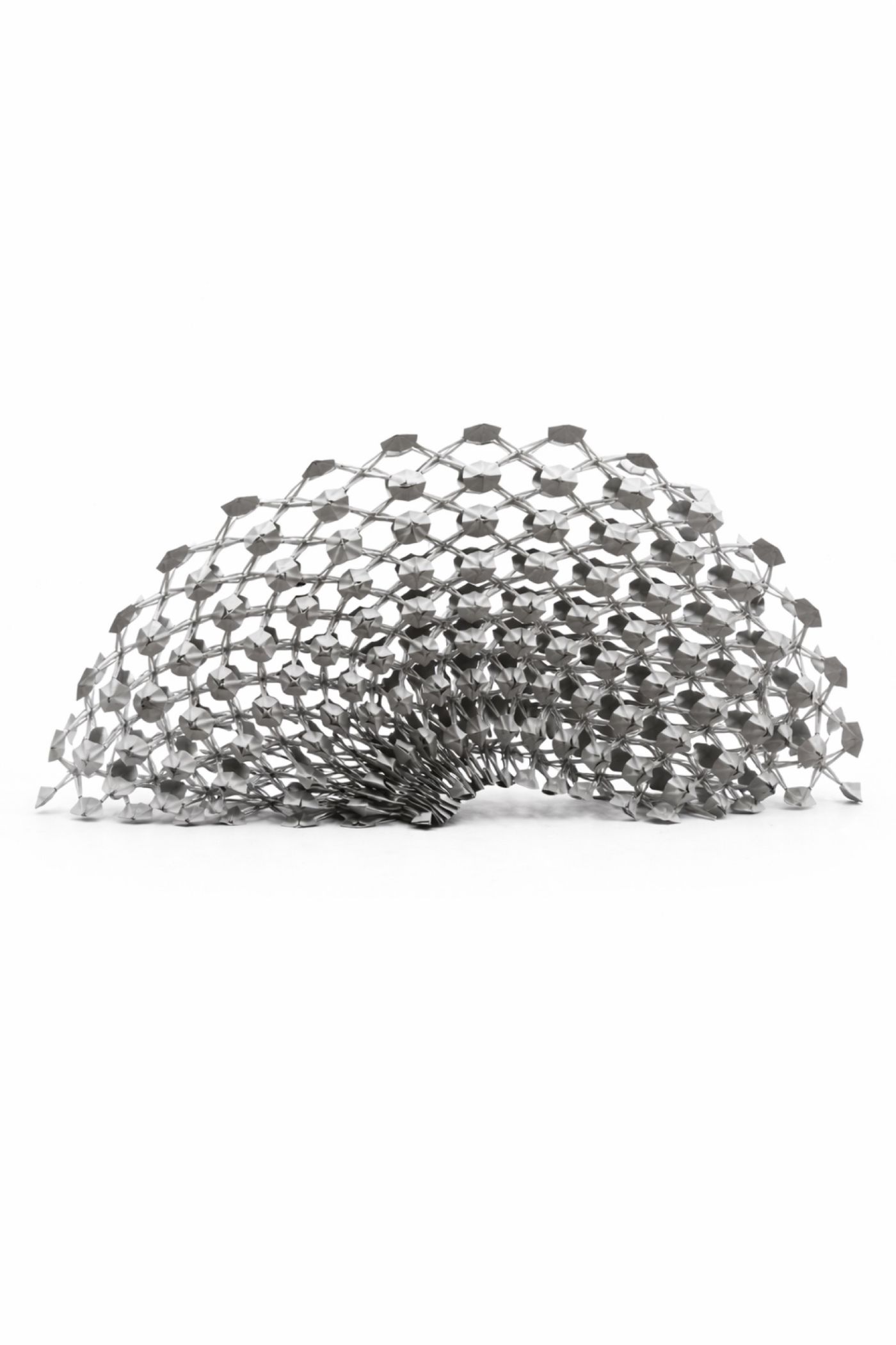
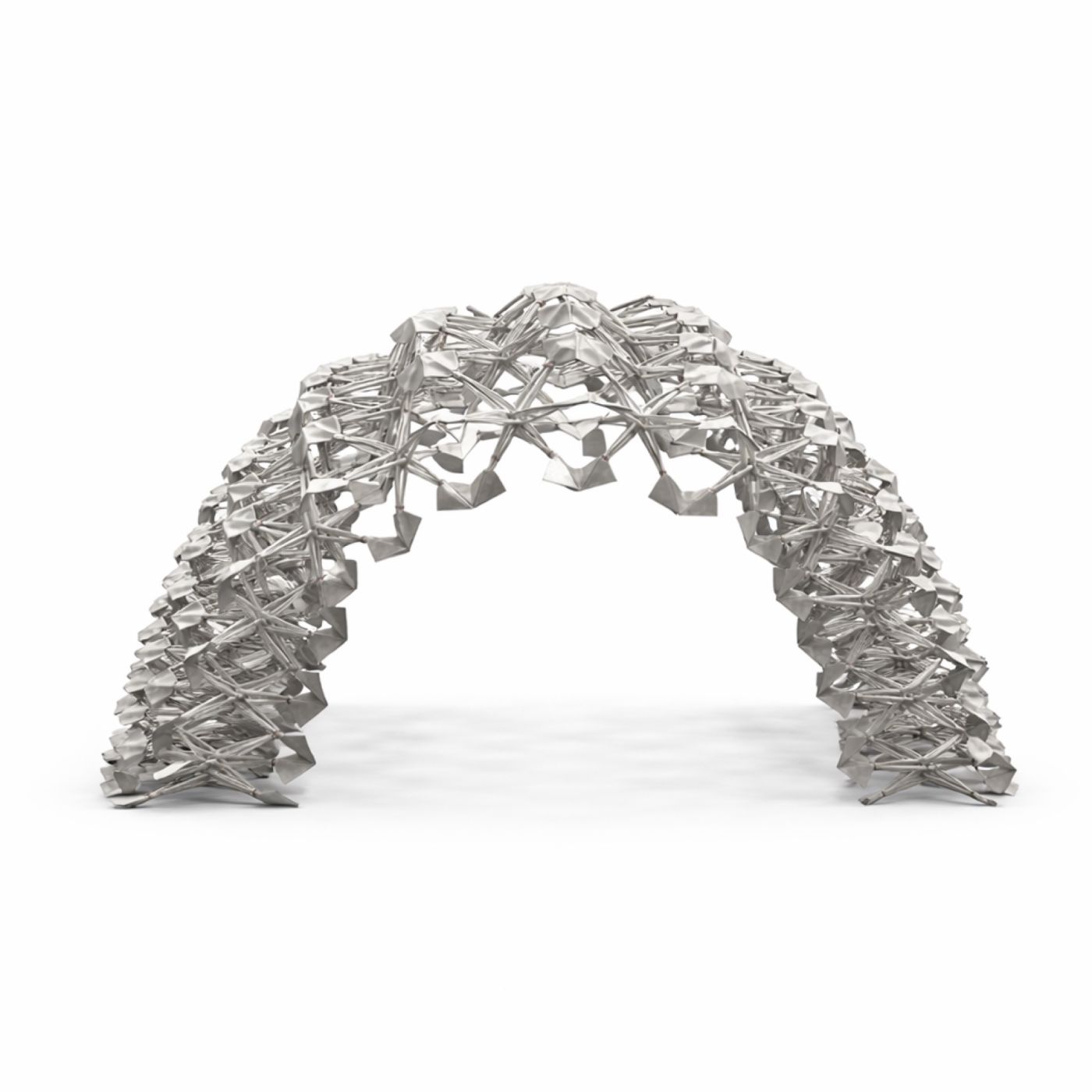
TH: เป็นการทดลองระบบ Modular Structural โดยเริ่มจากการทำ module ขนาดเล็กและทำซ้ำเพื่อให้เกิดโครงสร้างขนาดใหญ่ขึ้น แนวคิดหลักคือการใช้คุณสมบัติความยืดหยุ่นของวัสดุร่วมกับระบบการเชื่อมต่อที่สามารถปรับมุมได้ทั้ง 4 แกน เพื่อนำไปต่อยอดพัฒนาโครงสร้างยืดหยุ่นได้รูปแบบใหม่
EN: An experiment in a modular structural system, starting from a small module that is repeated to form a larger structure. The core concept is to combine the flexibility of the material with a connection system whose angle can be adjusted along all four axes, in order to develop a new kind of flexible structure.
Proposition
TH: จะใช้คุณสมบัติความยืดหยุ่นของวัสดุร่วมกับระบบข้อต่อที่ปรับมุมได้ทั้ง 4 แกน เพื่อสร้างโครงสร้างยืดหยุ่นรูปแบบใหม่ที่ปรับเปลี่ยนรูปทรงได้อย่างไร
EN: How can the flexibility of the material be combined with a joint system adjustable along all four axes to create a new kind of flexible structure that can change its form?
Research Context
TH: ศึกษาจากแนวทางโครงสร้างไม้ที่ยืดหยุ่นได้ (flexible stick structures) และเทคนิคการสานไม้ (stick weaving) เพื่อเป็นกรอบอ้างอิงในการพัฒนาระบบโมดูลและข้อต่อ
EN: Drawing on approaches to flexible stick structures and stick-weaving techniques as a reference framework for developing the module and joint system.
Experimental Methodology
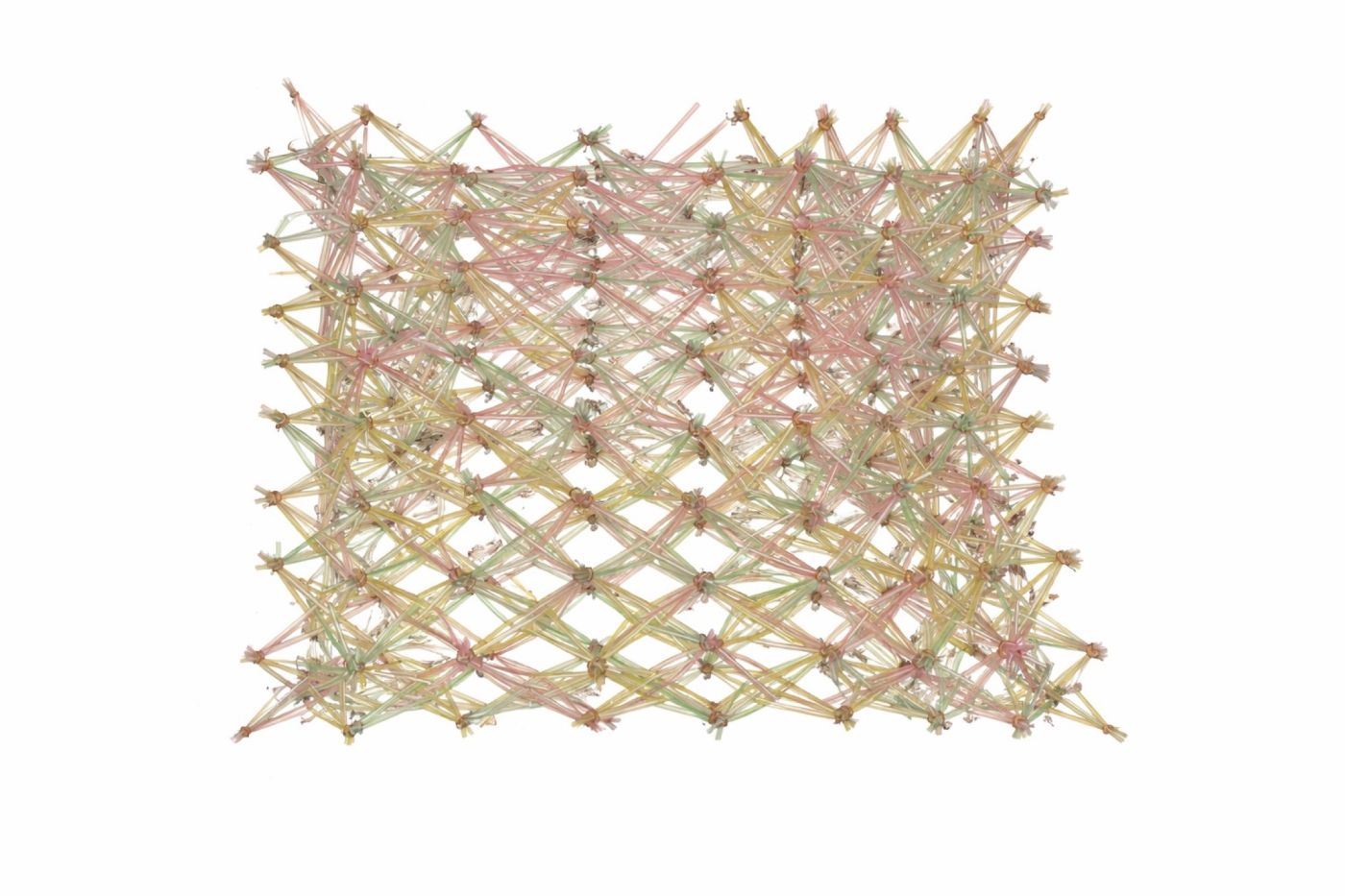
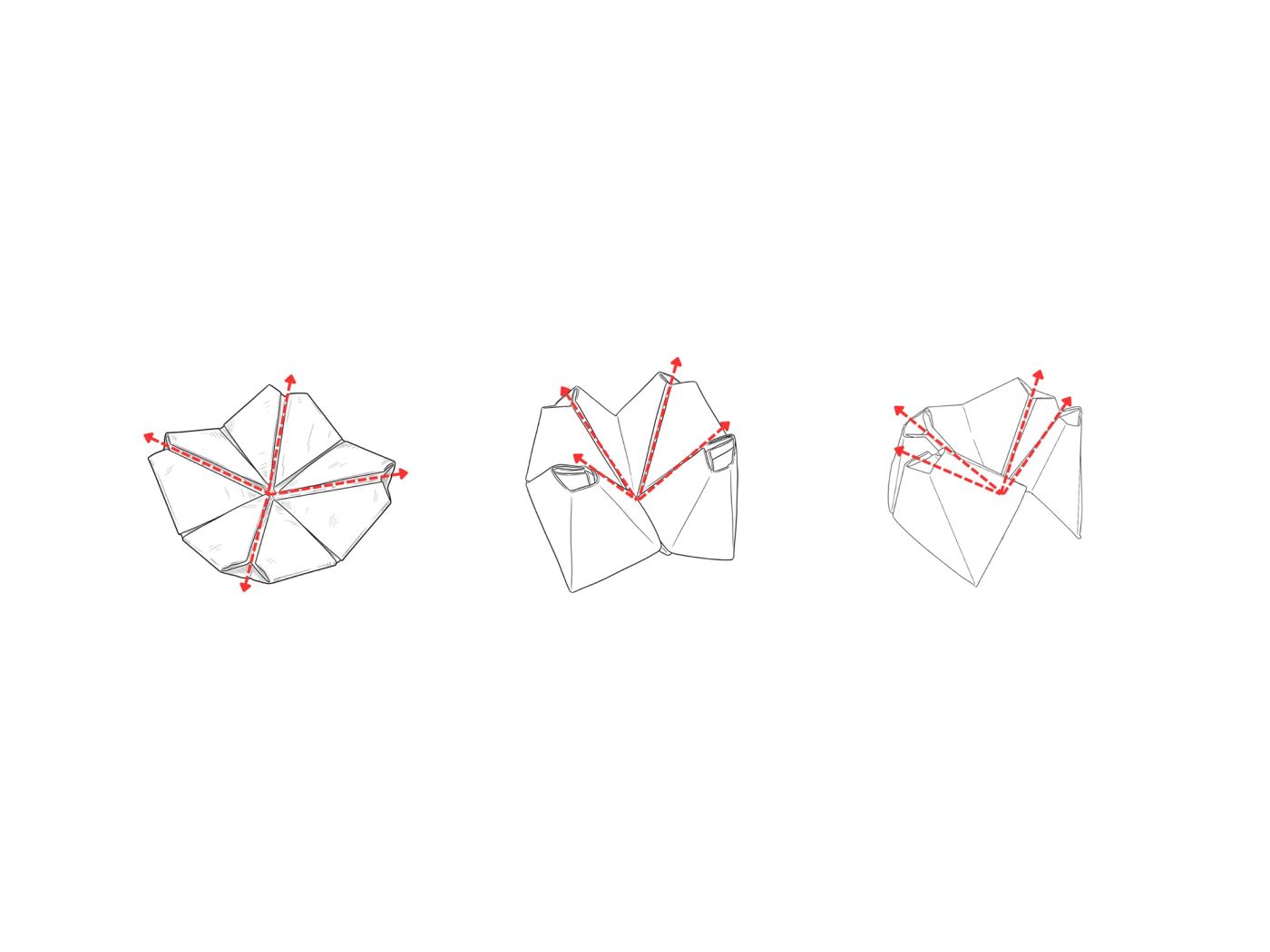
TH: เริ่มจากการถักไม้หวายในรูปแบบ tristix 85 ชิ้น และใช้กระดาษคราฟท์พับในรูปแบบ Origami Fortune Teller และตัดที่ปลายทั้ง 4 แกน ให้กลายเป็น joint 175 ชิ้น จากนั้นนำมาประกอบกัน โดยใช้แกนของ tristix เสียบเข้าจุดที่ตัดปลาย และพับปิดด้วยกาวติดไม้ และทำซ้ำให้ครบทั้งหมด 85 ชิ้น
EN: Beginning by weaving rattan into 85 tristix modules, and folding kraft paper in the Origami Fortune Teller form, then cutting the ends along all four axes to make 175 joints. These are then assembled by inserting the tristix axes into the cut ends and sealing them with wood glue, repeating the process to complete all 85 modules.
Material / Structural Performance
TH: ผลลัพธ์ของการประกอบโมดูลและ joint ทำให้เกิดโครงสร้างสามมิติแบบ network structure ที่มีความโปร่งและยืดหยุ่น รูปทรงของโครงสร้างไม่ได้ถูกกำหนดตั้งแต่ต้น แต่เกิดจากกระบวนการรวมตัวของโมดูลผ่านระบบ joint ทำให้สามารถพัฒนาเป็นโครงสร้างที่ต่อเนื่องและเปลี่ยน Form ได้ จุดเด่นของวัสดุ: ไม้หวายมีความเหนียว ยืดหยุ่นแต่แตกหักยาก, กระดาษคราฟท์มีความหนามากกว่ากระดาษปกติ, หนังยาง และกาวติดไม้
EN: Assembling the modules and joints produces a three-dimensional network structure that is open and flexible. The form of the structure is not predetermined but emerges from the aggregation of modules through the joint system, allowing it to develop into a continuous structure that can change form. Material strengths: rattan is tough and flexible yet resistant to breaking; kraft paper is thicker than ordinary paper; rubber bands; and wood glue.
Future Research
TH: ระบบโมดูลและข้อต่อที่ปรับมุมได้สามารถนำไปต่อยอดพัฒนาเป็นโครงสร้างยืดหยุ่นรูปแบบใหม่ที่ต่อเนื่องและเปลี่ยนรูปทรงได้ในขนาดที่ใหญ่ขึ้น
EN: The modular and adjustable-joint system can be developed further into new continuous, form-changing flexible structures at a larger scale.
- กานต์สินี แคว้นคอนฉิม
- ปกาภัทร ดาวยันต์
- พัทธนันท์ อรรถพิมล
- ภคพร ยอดมิ่ง
- ปริยาภัทร อ่อนโพธิ์เตี้ย
- ธนัยนันท์ กังวาลวิจิตรกุล