Tensegrity
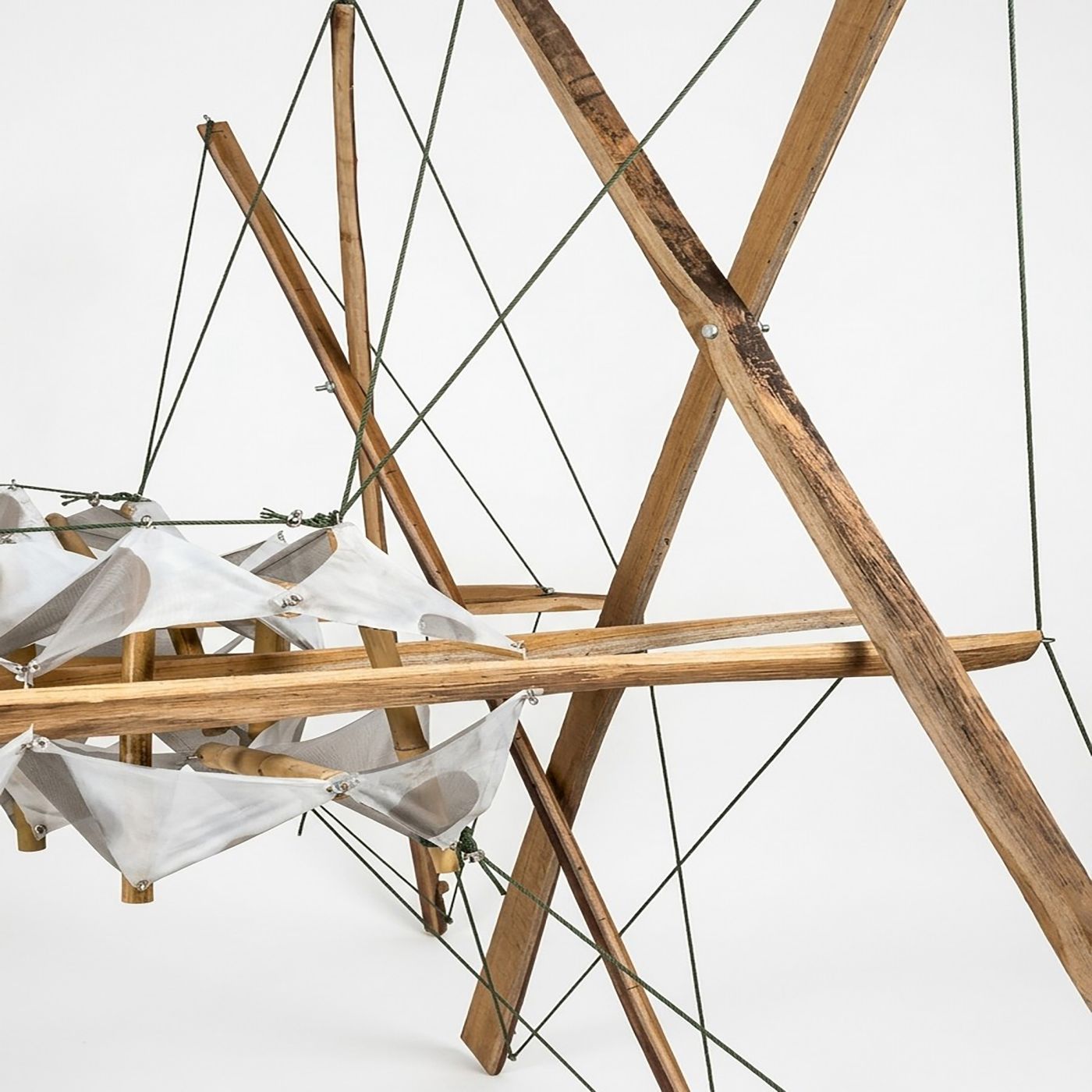
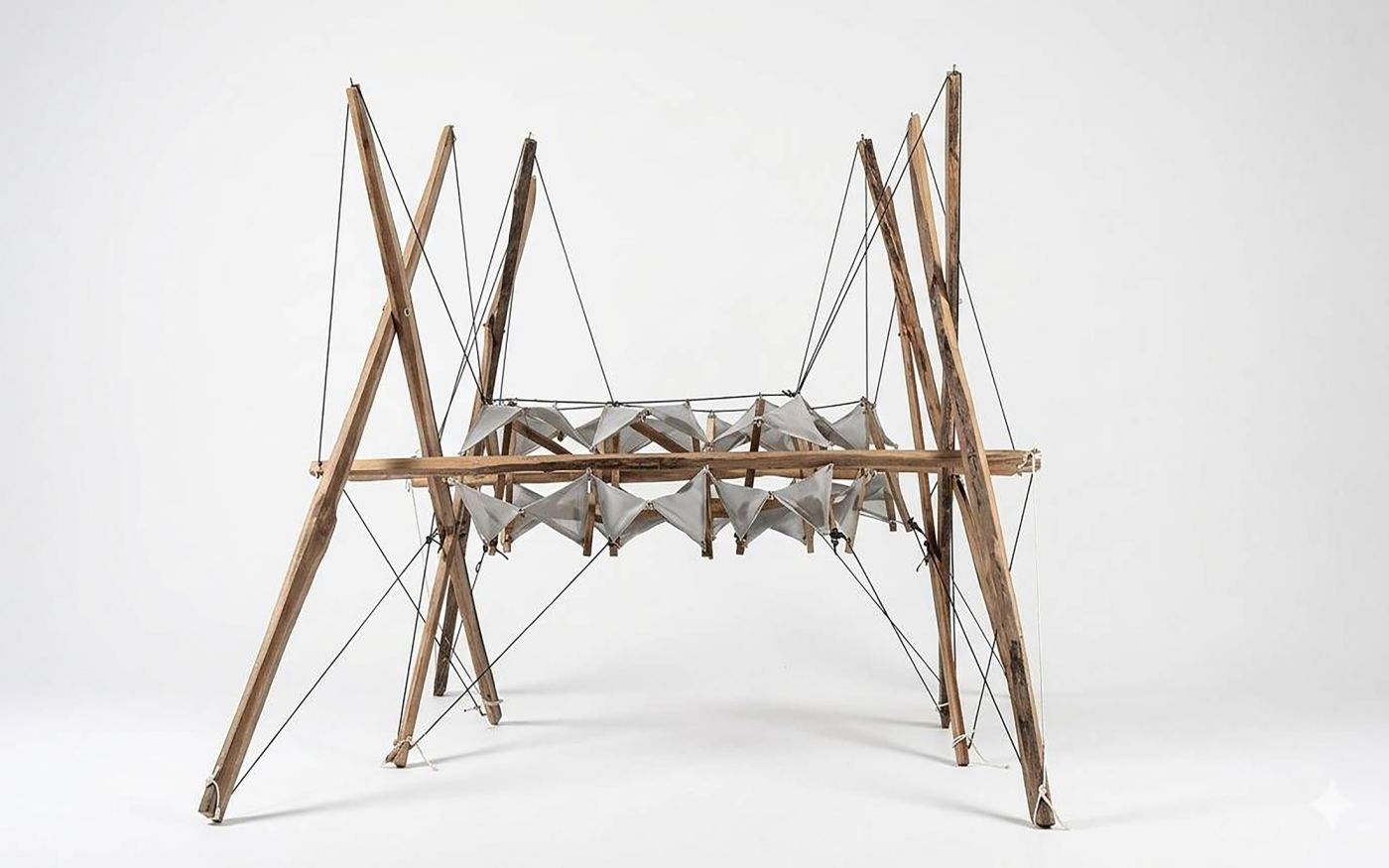
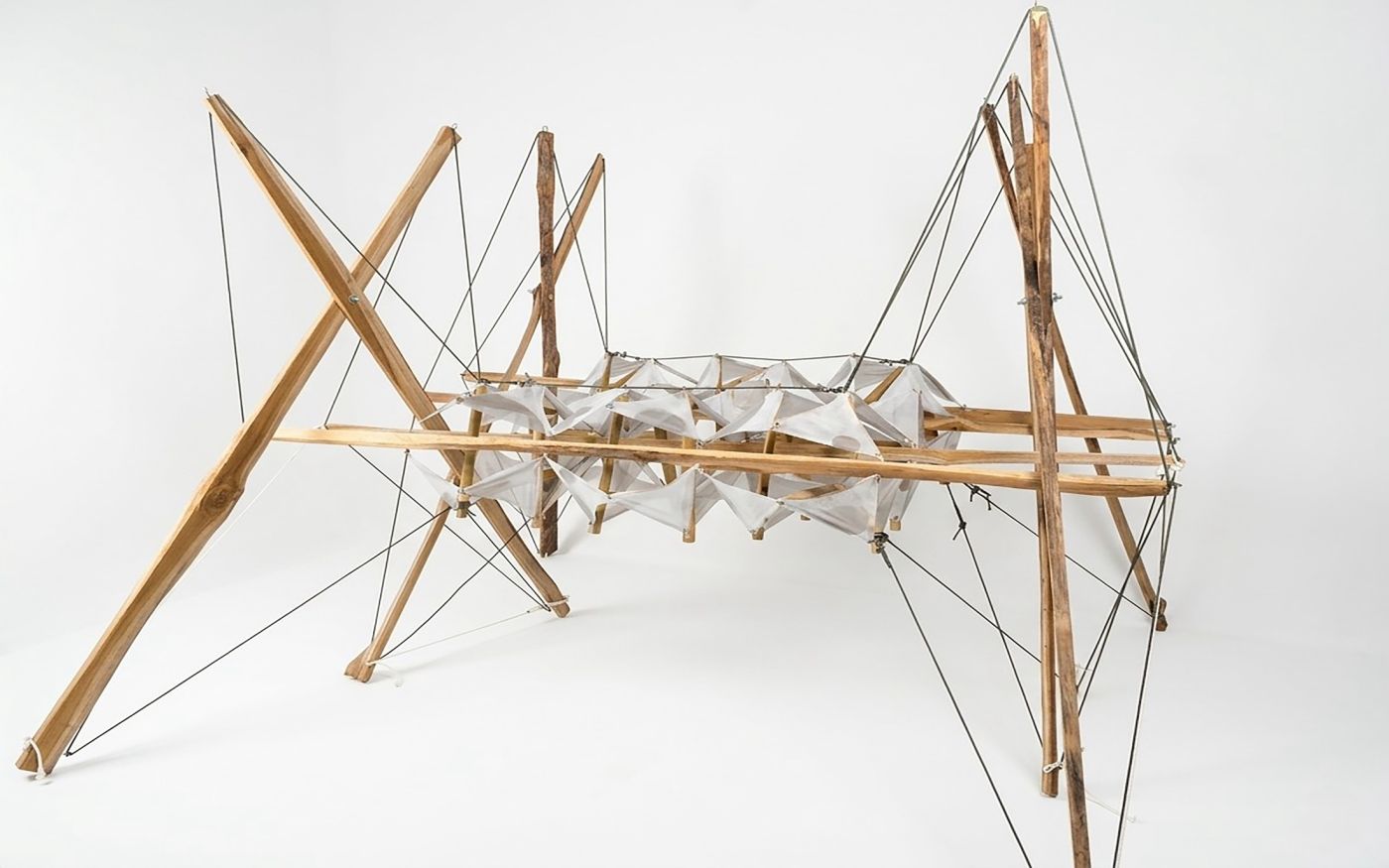
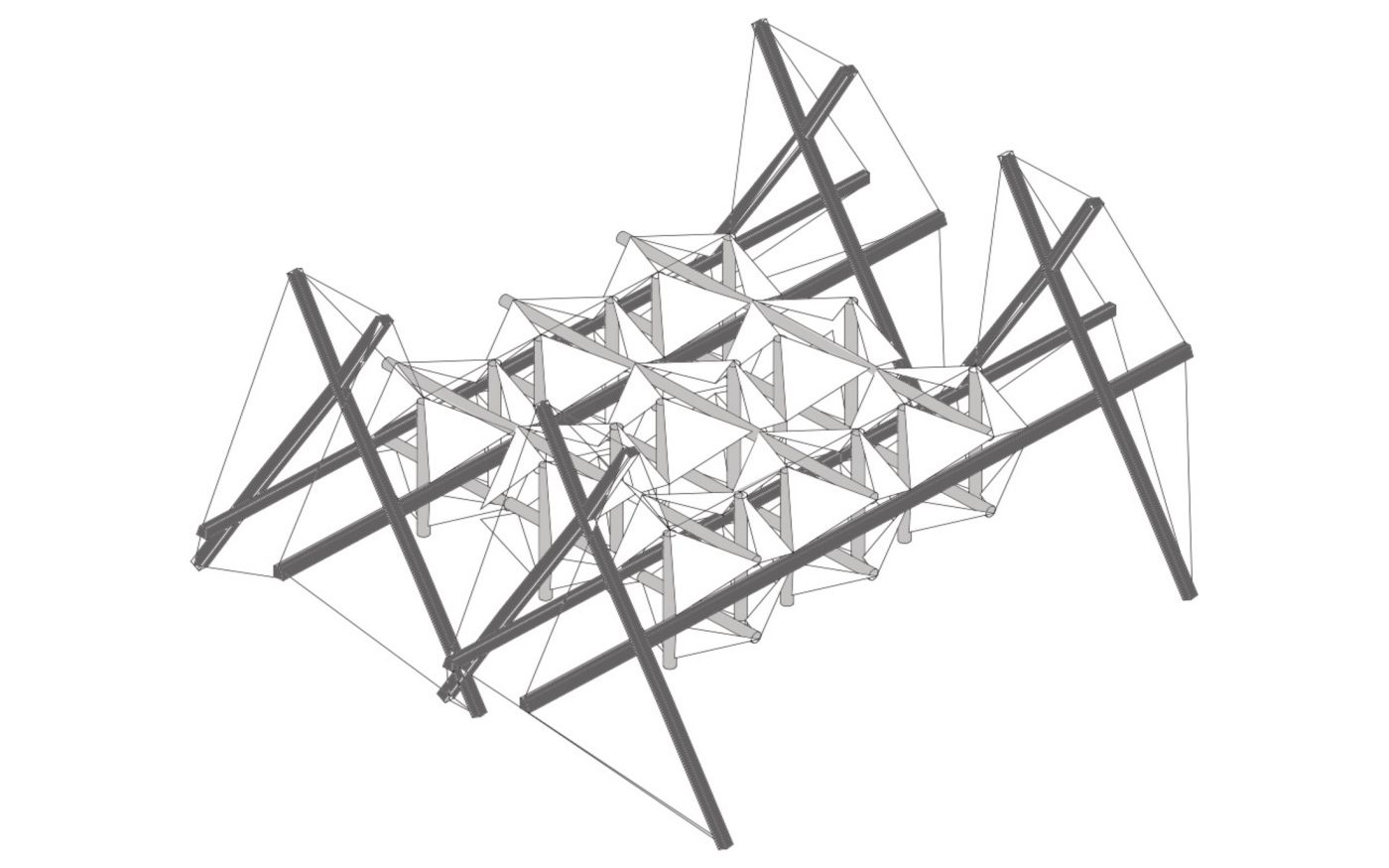
TH: แนวคิดหลักคืออยากได้โครงสร้างที่ลอยตัว โดยการลอยตัวนั้นคือการที่มีแรงดึงในตัวมันเอง ได้ทำการทดลองมาหลายรูปแบบ เริ่มแรกคือการทำความเข้าใจการทำงานของระบบ tensegrity ว่าทำงานอย่างไร และเริ่มทดลองกับหลายๆวัสดุและหลายรูปทรง จนมาได้การใช้แท่งไม้ 6 ชิ้น ที่มีทั้ง surface ของรูปสามเหลี่ยมและสี่เหลี่ยมที่นำไปต่อยอดได้ จนเกิดคำถามว่าเอาไปทำอะไรได้อีก และเกิดการทดลองเอามาต่อหลายๆรูปแบบ กระทั่งมาถึงจุดหนึ่งที่ตัวโครงสร้างอยู่ไม่ได้ด้วยตัวมันเอง จึงได้ออกแบบใหม่ โดยครั้งนี้ใช้โมดูลแยกที่เป็นตัว X ซึ่งทำให้โครงสร้างอยู่ตัวได้ด้วยการเอาโมดูลเดิมไปดึงกับตัว X ทำให้เกิดแรงที่ดึงกันเอง โครงสร้างนี้สามารถนำไปต่อยอดเป็นโครงสร้างช่วงกว้างหรือโครงสร้างสะพานแขวนได้และใช้วัสดุน้อย
EN: The core idea was to create a floating structure, where "floating" comes from the tension held within itself. Many forms were tested. The first step was understanding how a tensegrity system works, then experimenting with various materials and shapes. This led to the use of 6 wooden rods producing both triangular and quadrilateral surfaces that could be developed further. The question arose of what else could be made, leading to experiments connecting modules in many configurations, until a point where the structure could no longer stand on its own. It was therefore redesigned, this time using a separate X-shaped module. The X holds the structure stable by having the original module pulled against it, generating self-balanced internal tension. This structure can be further developed into long-span structures or suspension bridges using minimal material.
Proposition
TH: ต้องการสร้างโครงสร้างที่ลอยตัวด้วยการมีแรงดึงในตัวเอง และตั้งคำถามว่าโมดูล tensegrity สามารถนำไปต่อยอดเป็นโครงสร้างอะไรได้บ้าง
EN: To create a structure that appears to float through internal tension, asking how a tensegrity module can be developed into larger structural applications.
Research Context
TH: การทดลองเริ่มจากการทำความเข้าใจการทำงานของระบบ tensegrity ที่ประกอบด้วยส่วนรับแรงอัดและส่วนรับแรงดึง ซึ่งทำงานร่วมกันโดยไม่สัมผัสกันโดยตรง แต่เชื่อมโยงกันผ่านระบบแรงที่สมดุล อ้างอิงหลักการ tensegrity และกรณีศึกษาโครงสร้าง tensegrity ในงานสถาปัตยกรรม
EN: The study began from understanding how a tensegrity system works, composed of compression members and tension members that act together without touching directly, linked through a balanced force system. It draws on the principle of tensegrity and case studies of tensegrity structures in architecture.
Experimental Methodology
TH:
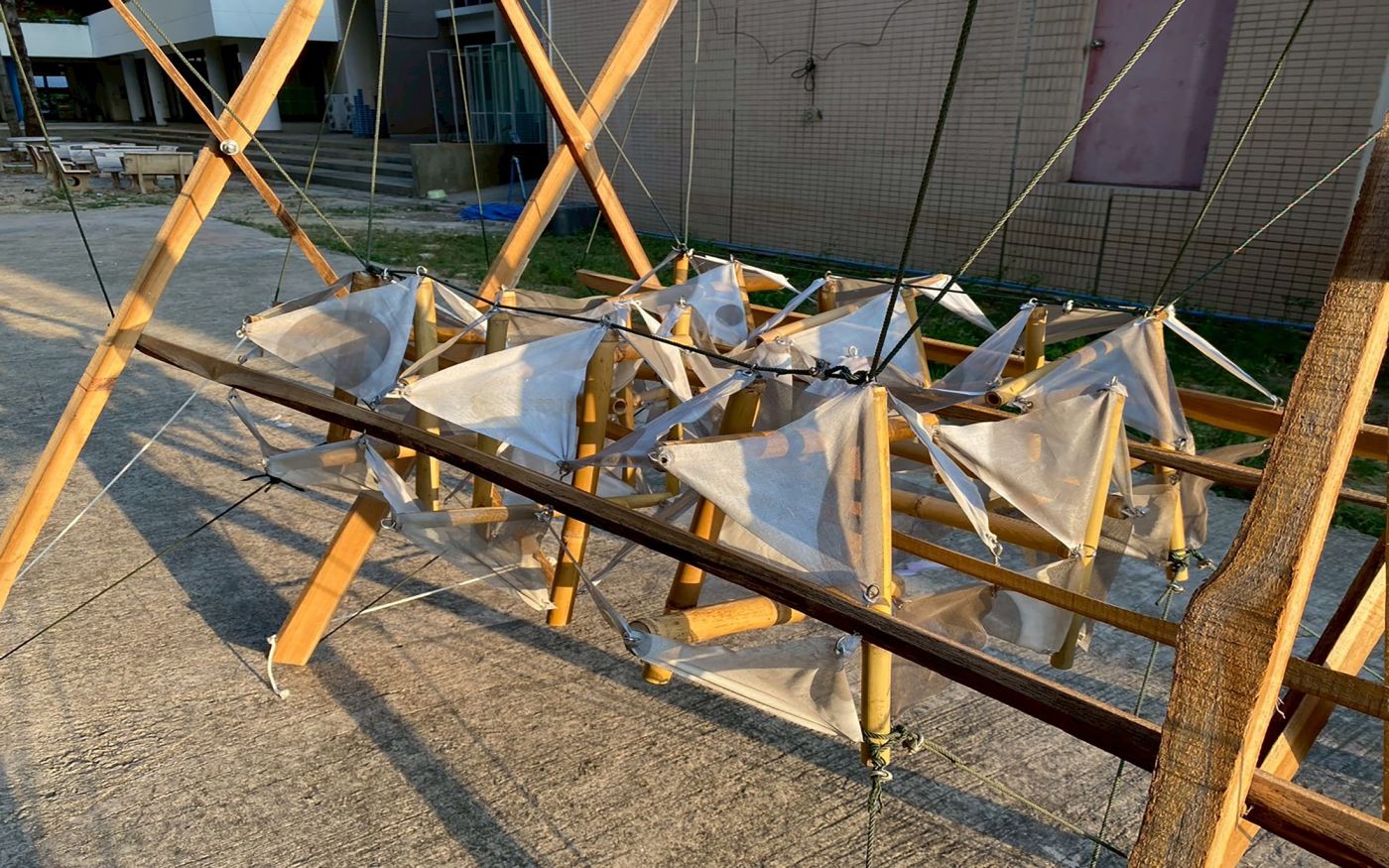
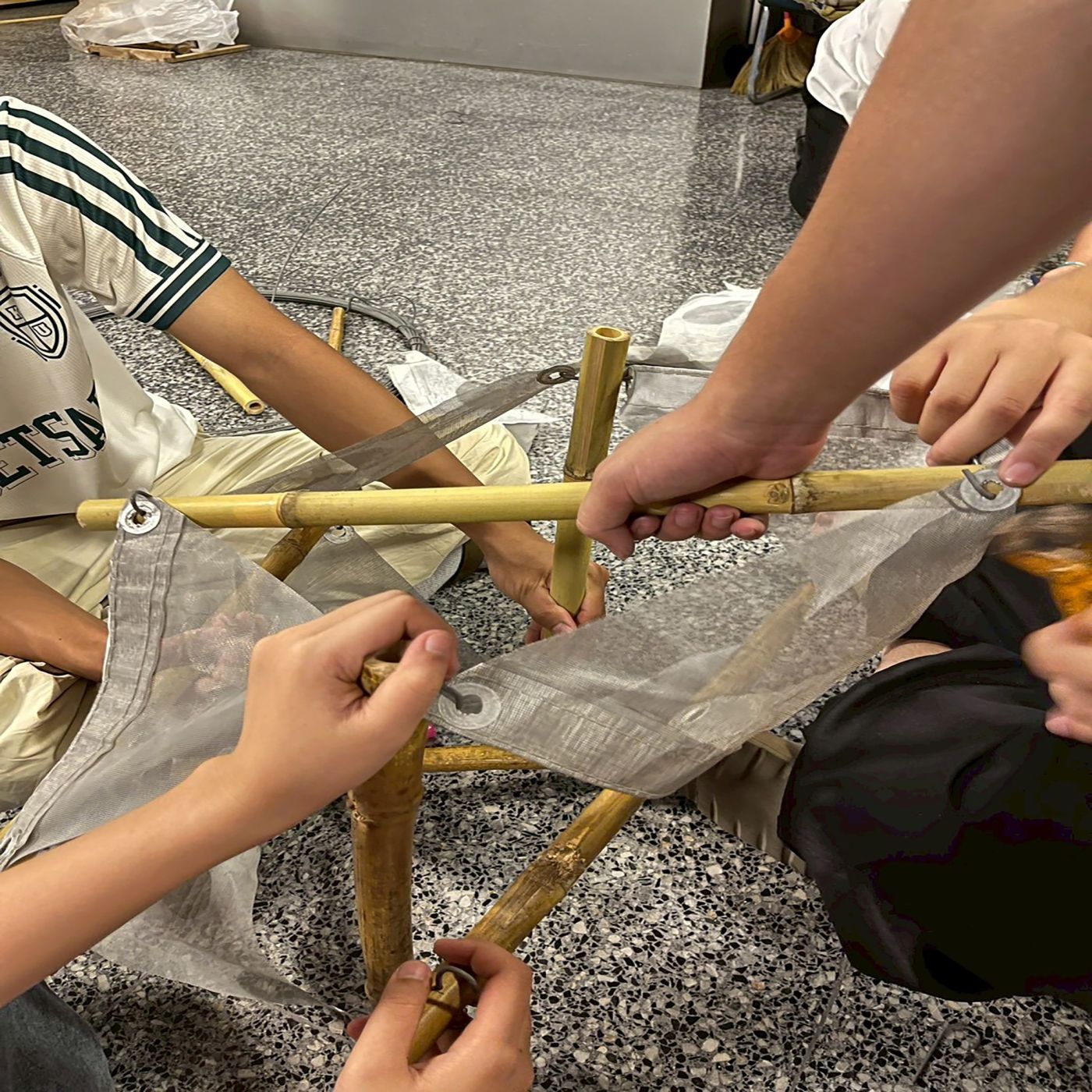
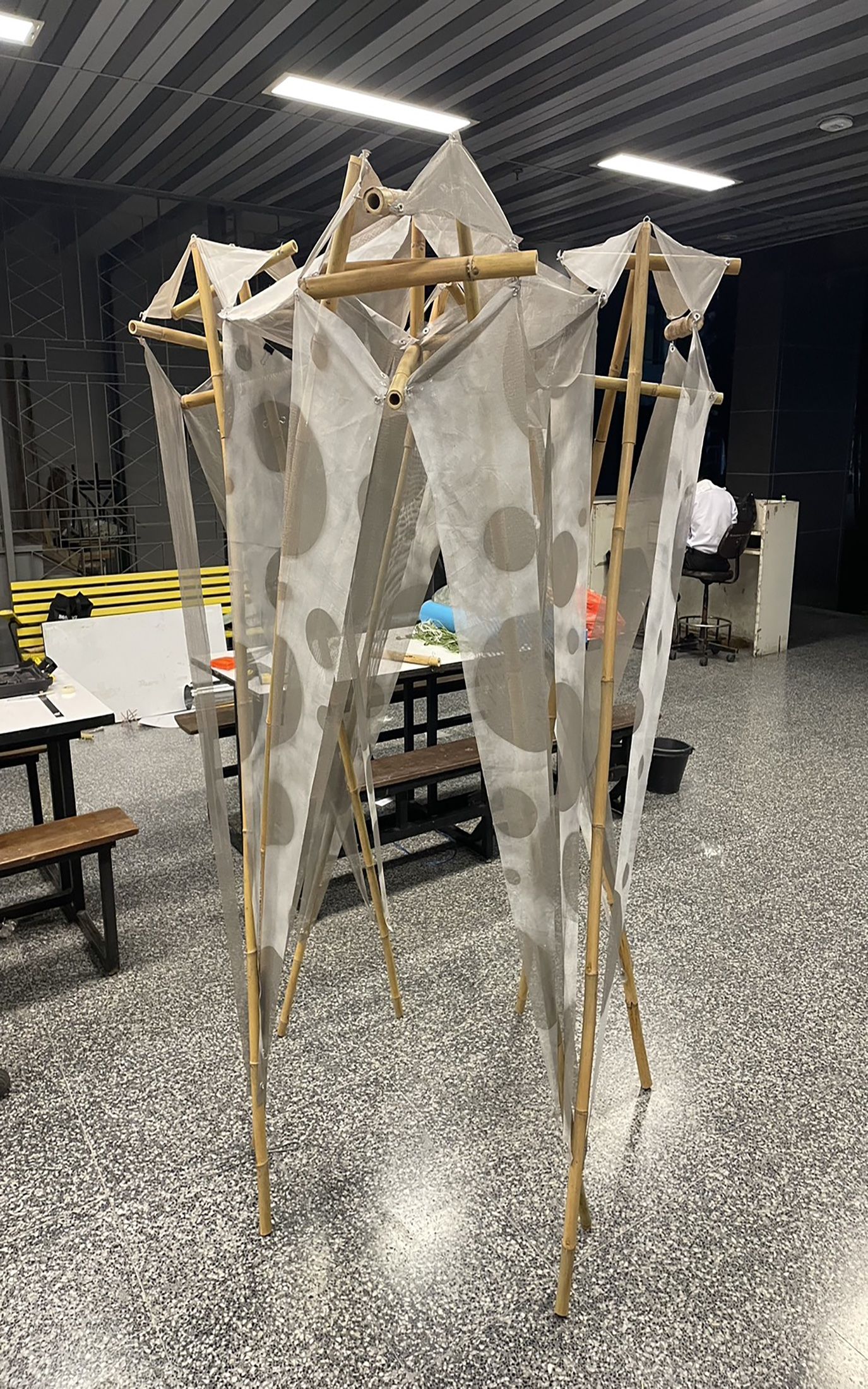
- การสร้าง Module — เริ่มจากนำไม้ไผ่มาตัดเป็นขนาดที่ต้องการ และตัดผ้าเป็นรูปสามเหลี่ยมที่ขึงให้ตึง มาสร้างเป็นโครงสร้างแบบ Tensegrity 6 ชิ้น ประกอบเป็น 1 Module โดยใช้ผ้าเป็นส่วน Surface แทนการใช้เส้น
- การเชื่อมต่อระหว่าง Module — นำ Module Tensegrity จำนวน 3 หน่วยมาเชื่อมต่อกันในแนวเส้นตรง (Linear) โดยใช้ไม้ส่วนเปลือกไม้ทำหน้าที่เป็นสมาชิกโครงสร้างร่วม ส่วนนี้สามารถต่อเพิ่มได้มากกว่า 3 หน่วยเพื่อเป็นช่วงพาดที่ยาวขึ้น
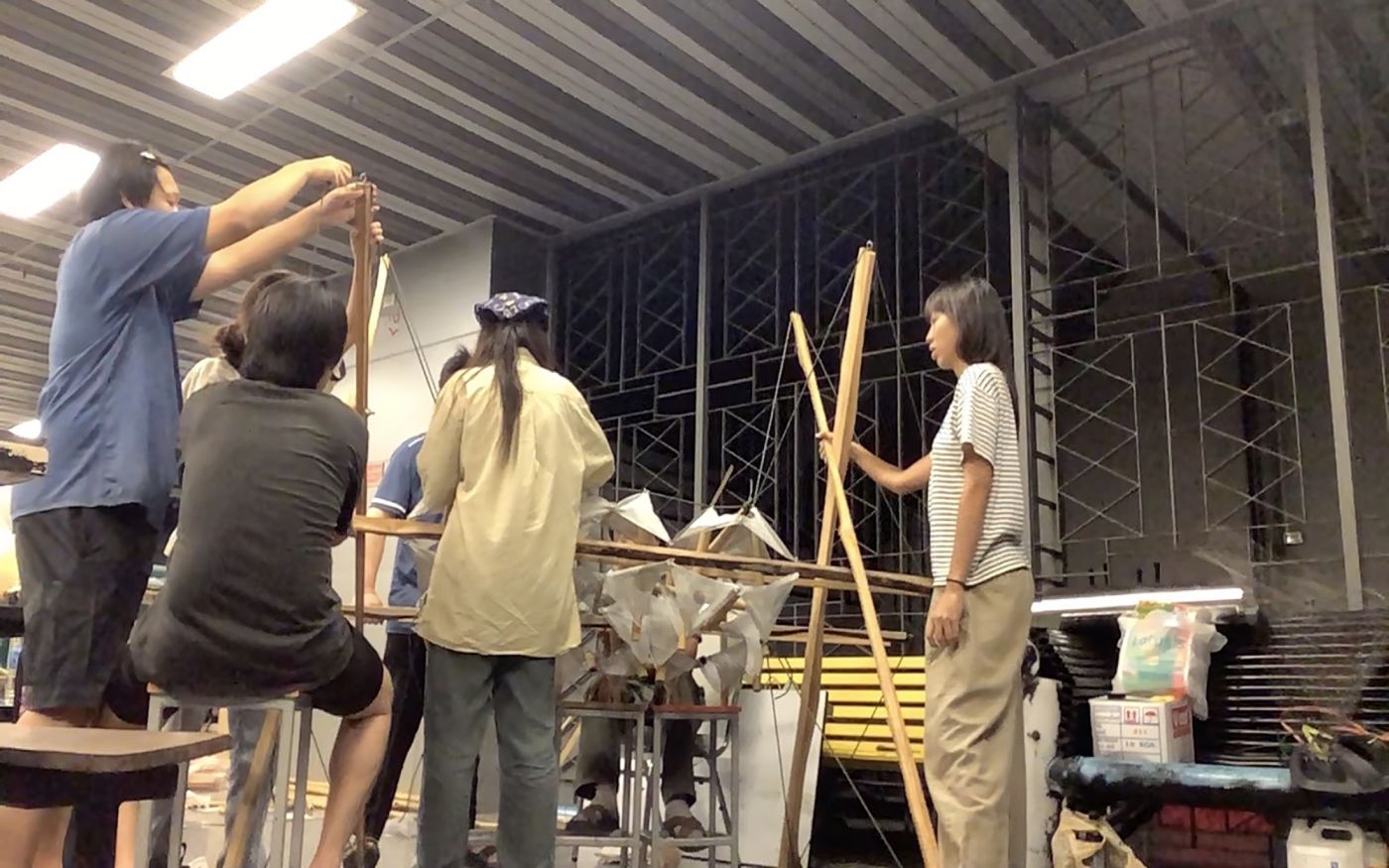
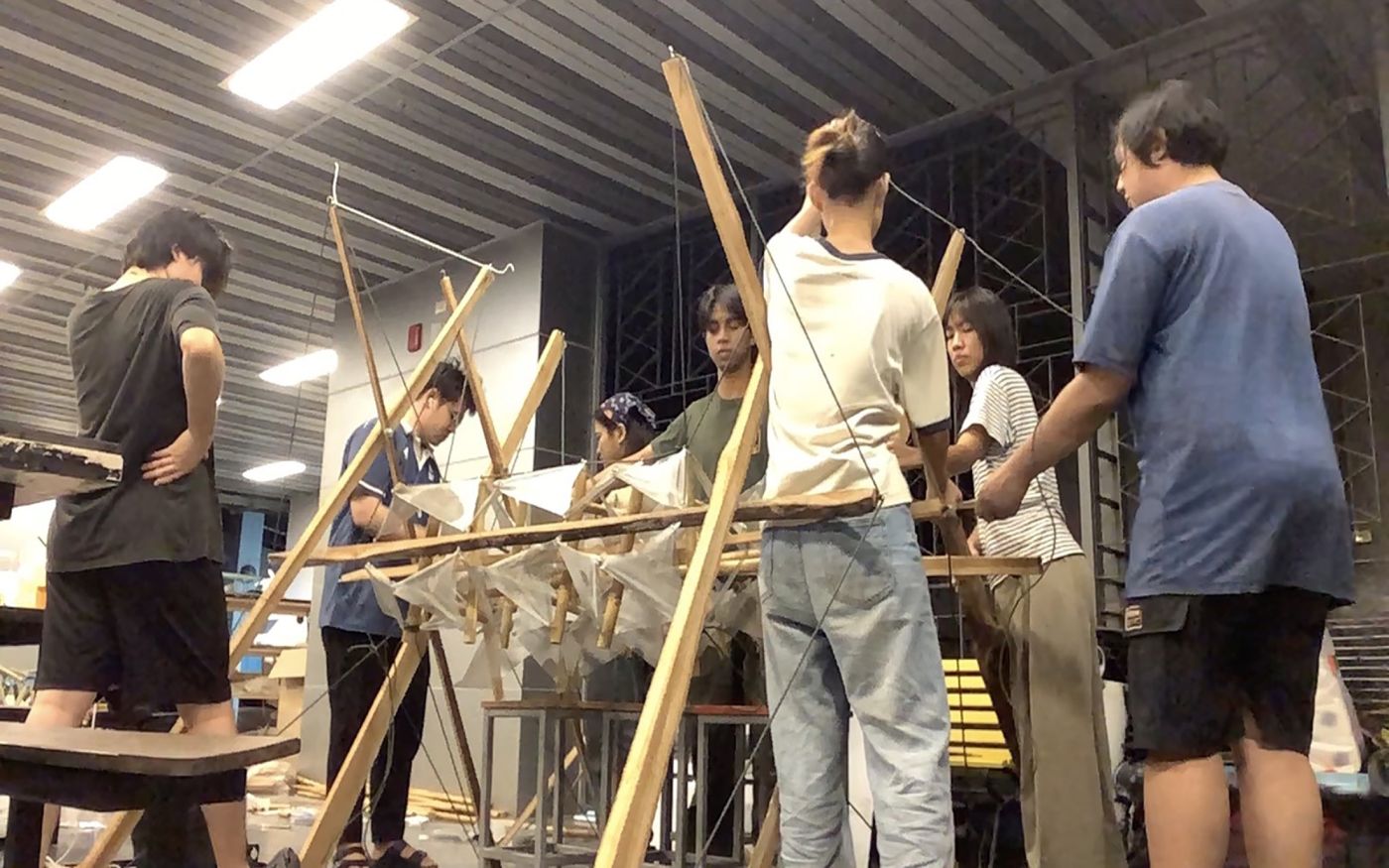
- การเสริมโครงสร้างภายนอก (Outer System) — จากการทดลองแรง (ผ่านโมเดลหรือเกม) ได้พัฒนาโครงสร้างเสริมภายนอกเป็นไม้ตัว X ทำหน้าที่เป็นเสา โดยนำโมดูล Tensegrity เดิมไปเชื่อมและดึงเข้ากับโครงสร้างรูป X ทำให้เกิดแรงดึงที่สมดุลกันภายในระบบ
ส่งผลให้โครงสร้างทั้งหมดประกอบด้วย: 1) ระบบใน (Primary System) เป็นไม้ไผ่ 2) ระบบนอก (Secondary System) เป็นเปลือกไม้ที่เหลือใช้
EN: - Building the Module — Bamboo was cut to the required sizes and fabric cut into triangles stretched taut, forming a Tensegrity structure of 6 pieces making up 1 Module, using fabric as the surface instead of strings.
- Connecting Modules — Three Tensegrity Modules were connected linearly using bark members acting as shared structural members. This section can be extended beyond 3 units to form a longer span.
- Outer System reinforcement — From force experiments (via model or game), an external reinforcing structure was developed: X-shaped wood acting as columns. The original Tensegrity modules were connected and pulled against the X structure, creating balanced internal tension.
The complete structure therefore consists of: 1) Primary System (inner) of bamboo, 2) Secondary System (outer) of leftover bark.
Material / Structural Performance
TH: การทำงานของ Tensegrity ประกอบด้วยส่วนรับแรงอัดและส่วนรับแรงดึง ซึ่งทำงานร่วมกันโดยไม่สัมผัสกันโดยตรง แต่เชื่อมโยงกันผ่านระบบแรงที่สมดุล ทำให้โครงสร้างคงรูปได้มั่นคงแม้มีลักษณะเปิดและไม่ทึบตัน จากการทดลองสร้างแบบจำลองด้วยวัสดุที่หาได้ทั่วไป เช่น PVC เชือก ผ้าใบตาข่าย และไม้ไผ่ แสดงว่าสามารถประยุกต์ใช้ได้จริงในระดับพื้นฐาน เริ่มจากโครงสร้างอย่างง่าย (3 dowel) พัฒนาไปสู่โครงสร้างที่ซับซ้อนขึ้น (6 dowel) รวมถึงการจัดเป็นระบบหลัก (Primary System) และเสริมด้วยระบบรอง (Secondary System) ซึ่งช่วยเพิ่มความมั่นคงและความหลากหลายของรูปแบบ โครงสร้างในระบบ Tensegrity ผสานหลักฟิสิกส์และการออกแบบ มีความแข็งแรง ยืดหยุ่น และประหยัดวัสดุ.
วัสดุและจุดเด่น:
- ไม้ไผ่ — รับแรงอัด น้ำหนักเบาแต่แข็งแรง มีความยืดหยุ่นในตัวเอง รับแรงและปรับตัวตามแรงดึงจากวัสดุอื่นได้ดี ผิวสัมผัสให้ความรู้สึกเป็นธรรมชาติและเป็นมิตร
- ผ้าใบในคณะ — รับแรงดึง เกิดเป็น surface ของโครงสร้าง บางและยืดหยุ่น ขึงให้เกิดรูปทรงได้ตามแรงดึงโดยรอบ น้ำหนักเบา ปรับเปลี่ยนรูปทรงได้ตามแรงที่กระทำ
- เชือก — รับแรงดึง ปรับความตึงได้ ควบคุมรูปทรงได้อย่างยืดหยุ่น น้ำหนักเบาช่วยลดน้ำหนักรวม ทำให้โครงสร้างดูเบาและลอยตัว
- น็อต สกรู ตะขอและตาไก่ — เป็นจุดเชื่อมต่อ แข็งแรงทนทาน รับแรงเฉพาะจุดได้ดี ยึดต่อได้มั่นคง ถอดประกอบและปรับแก้ไขได้
EN: A tensegrity works through compression members and tension members acting together without direct contact, linked via a balanced force system, so the structure stays stable even though it is open and not solid. Models built from common materials (PVC, rope, mesh canvas, bamboo) showed the concept is applicable at a basic level, starting from a simple structure (3 dowel) and developing into a more complex one (6 dowel), organized into a Primary System reinforced by a Secondary System for added stability and formal variety. The tensegrity system combines physics and design with strength, flexibility, and material economy, with potential for real-world development.
Materials and strengths: - Bamboo — bears compression; lightweight yet strong, naturally flexible, adapts well to tension from other materials; its texture feels natural and user-friendly.
- Faculty canvas — bears tension, forms the structure's surface; thin and flexible, stretched into form by surrounding tension; lightweight and reshapeable under applied force.
- Rope — bears tension; adjustable tautness allows flexible control of form; its light weight reduces overall mass, making the structure look light and floating.
- Nuts, screws, hooks and eyelets — serve as connection points; strong and durable, handle localized loads well, secure joints, and allow disassembly and adjustment.
Future Research
TH: โครงสร้างนี้สามารถพัฒนาต่อยอดเป็นโครงสร้างช่วงกว้าง (long-span) หรือโครงสร้างสะพานแขวนได้ โดยใช้วัสดุน้อย และระบบโมดูลยังขยายตัวเพื่อสร้างรูปที่ซับซ้อนขึ้นได้อย่างเป็นระบบ
EN: The structure can be developed into long-span structures or suspension bridges using minimal material, and the modular system can be expanded systematically to create more complex forms.
- Kunyanut Saket
- Tanaboon Anuchitdacha
- Tanawat Nantanawoot
- Theerapat Petchana
- Pitchayanut Sooksawat
- Puttichat Onla-or
- Siwakorn Tabtawee
- Supawadee Oun-ok