Pliw-Mai
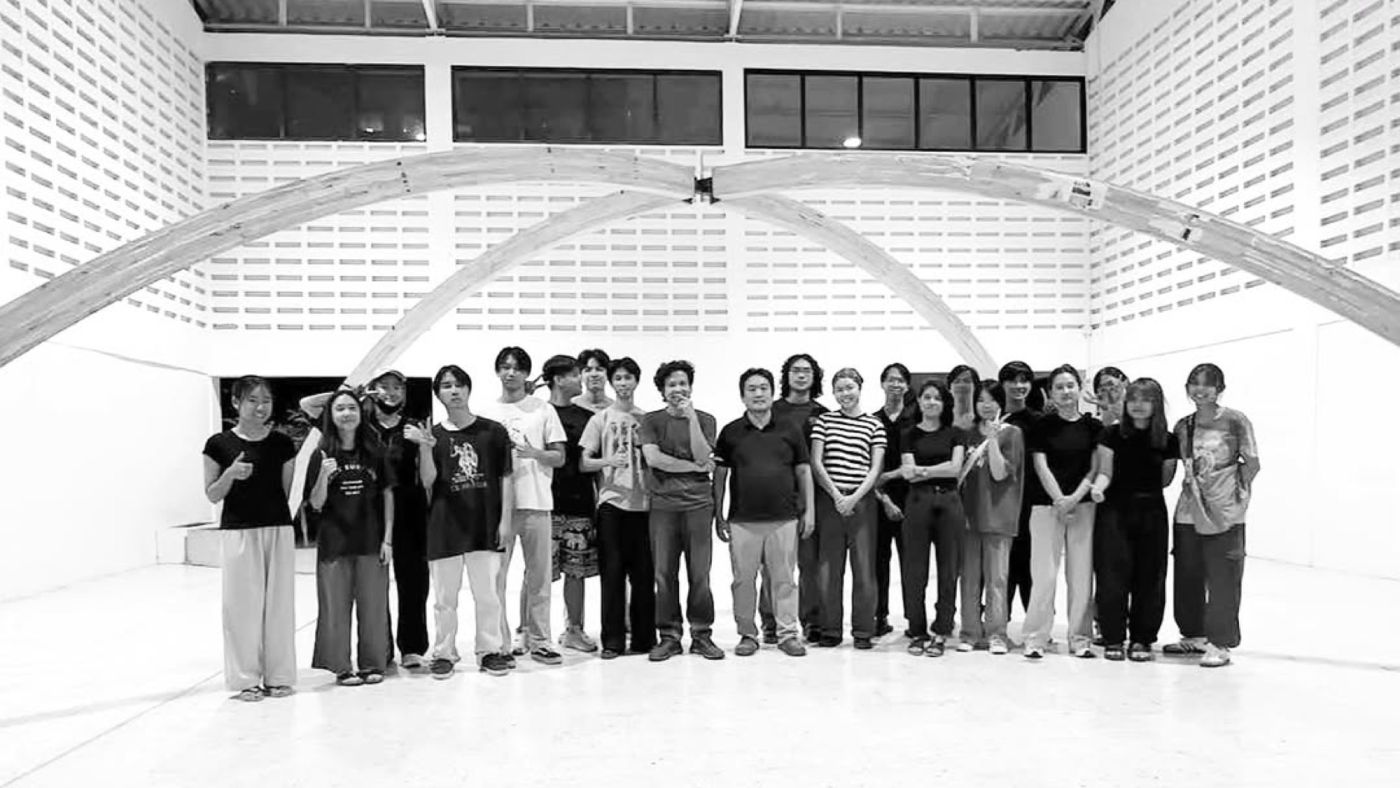
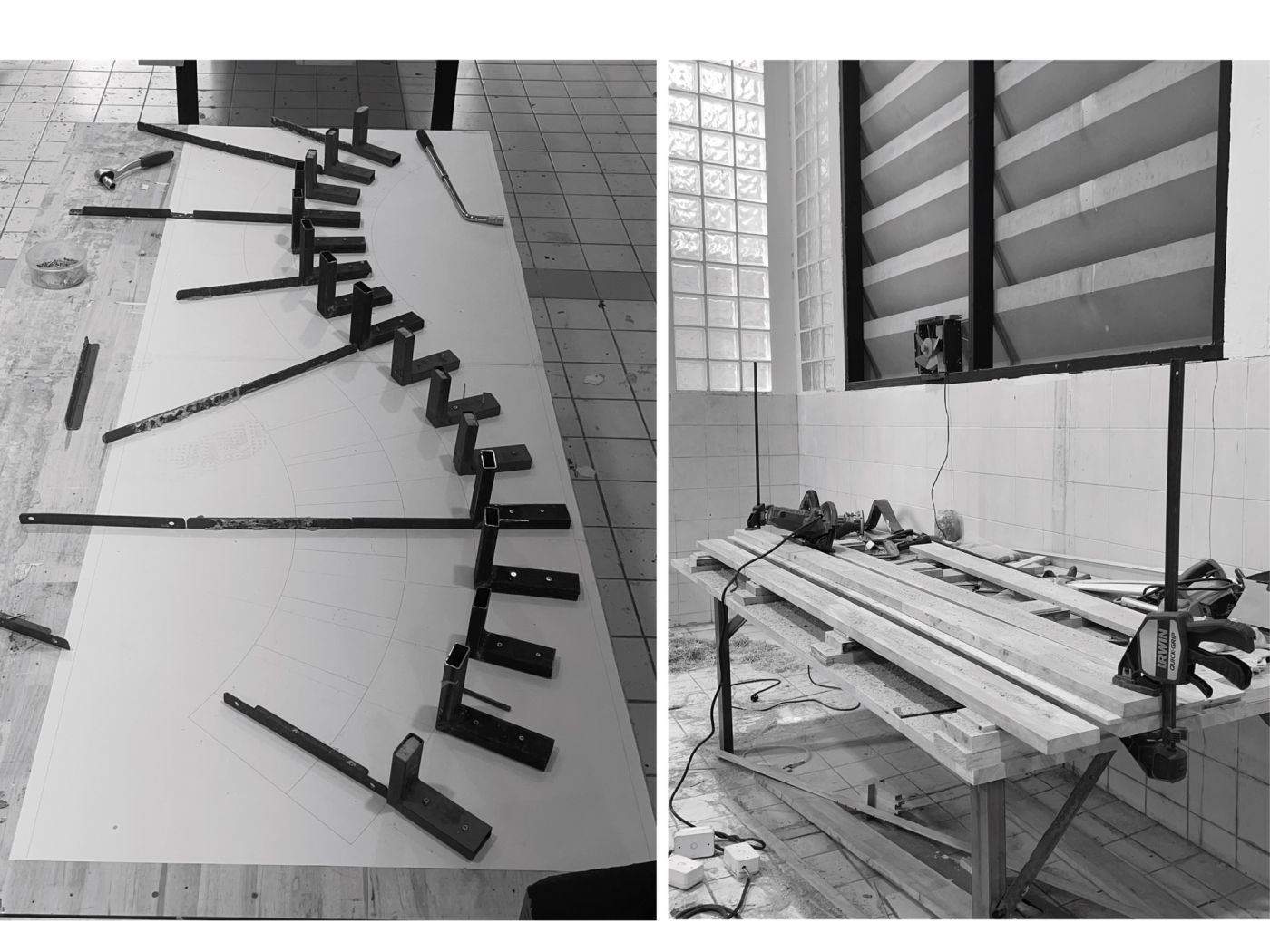
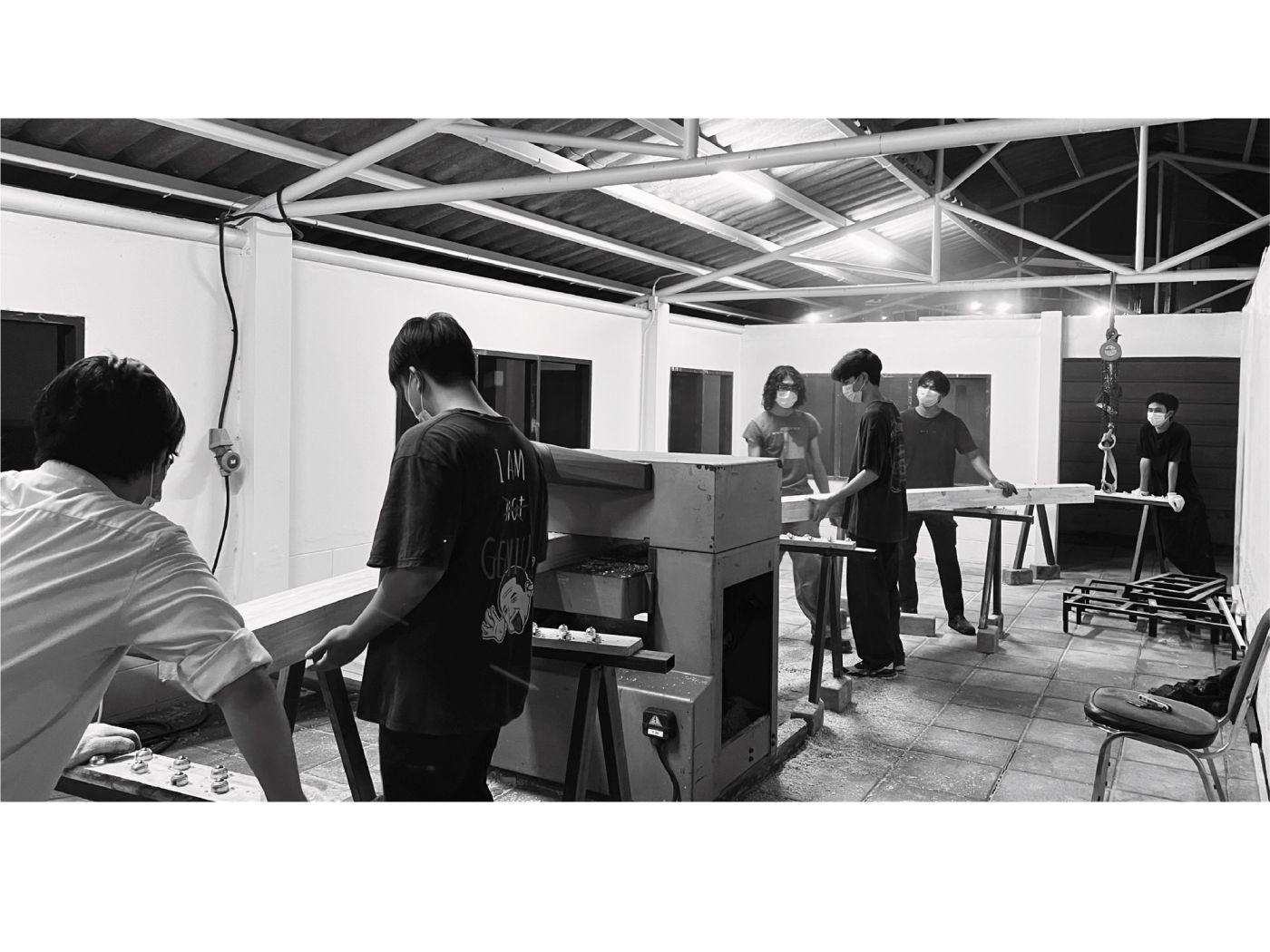
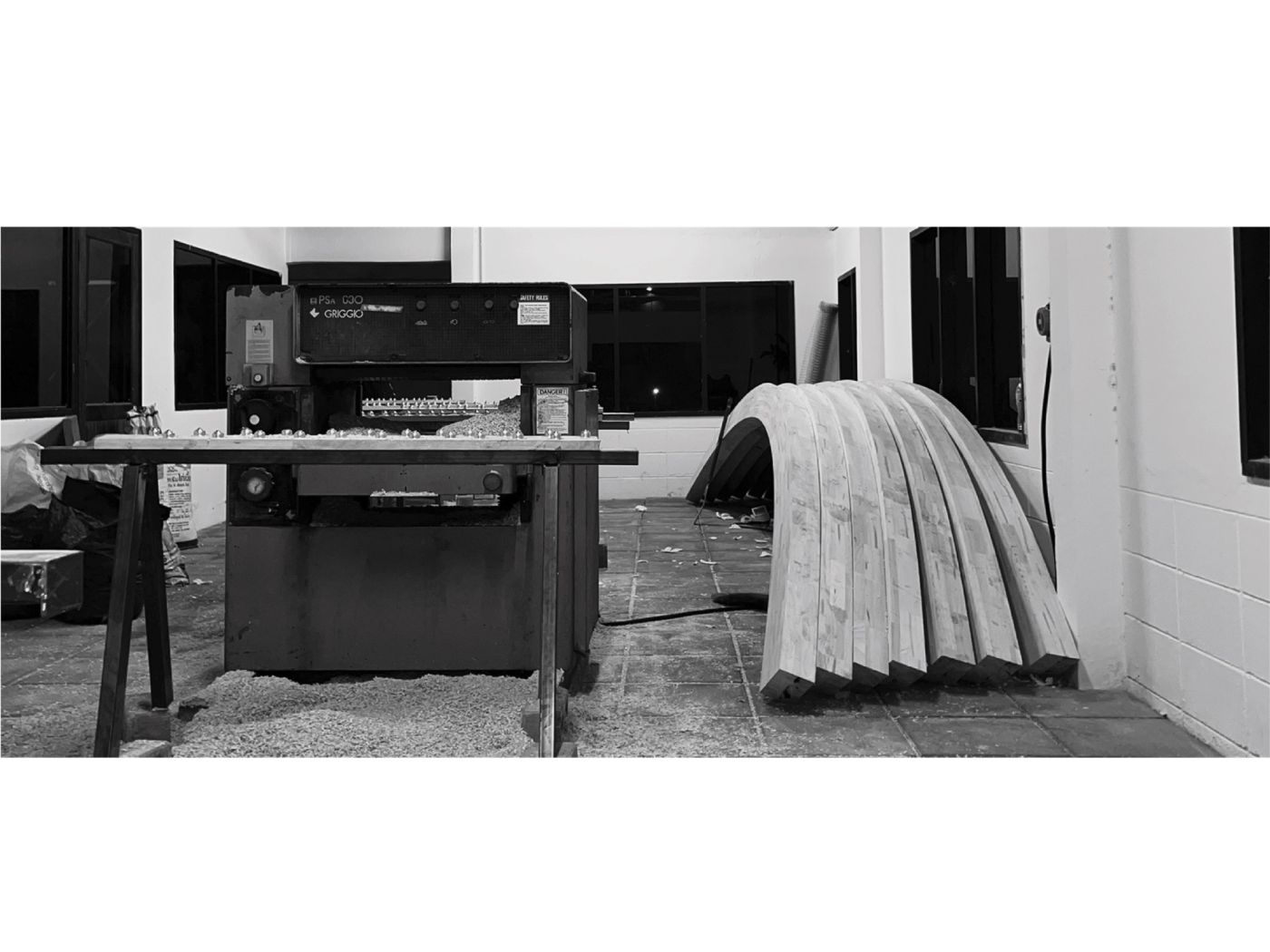
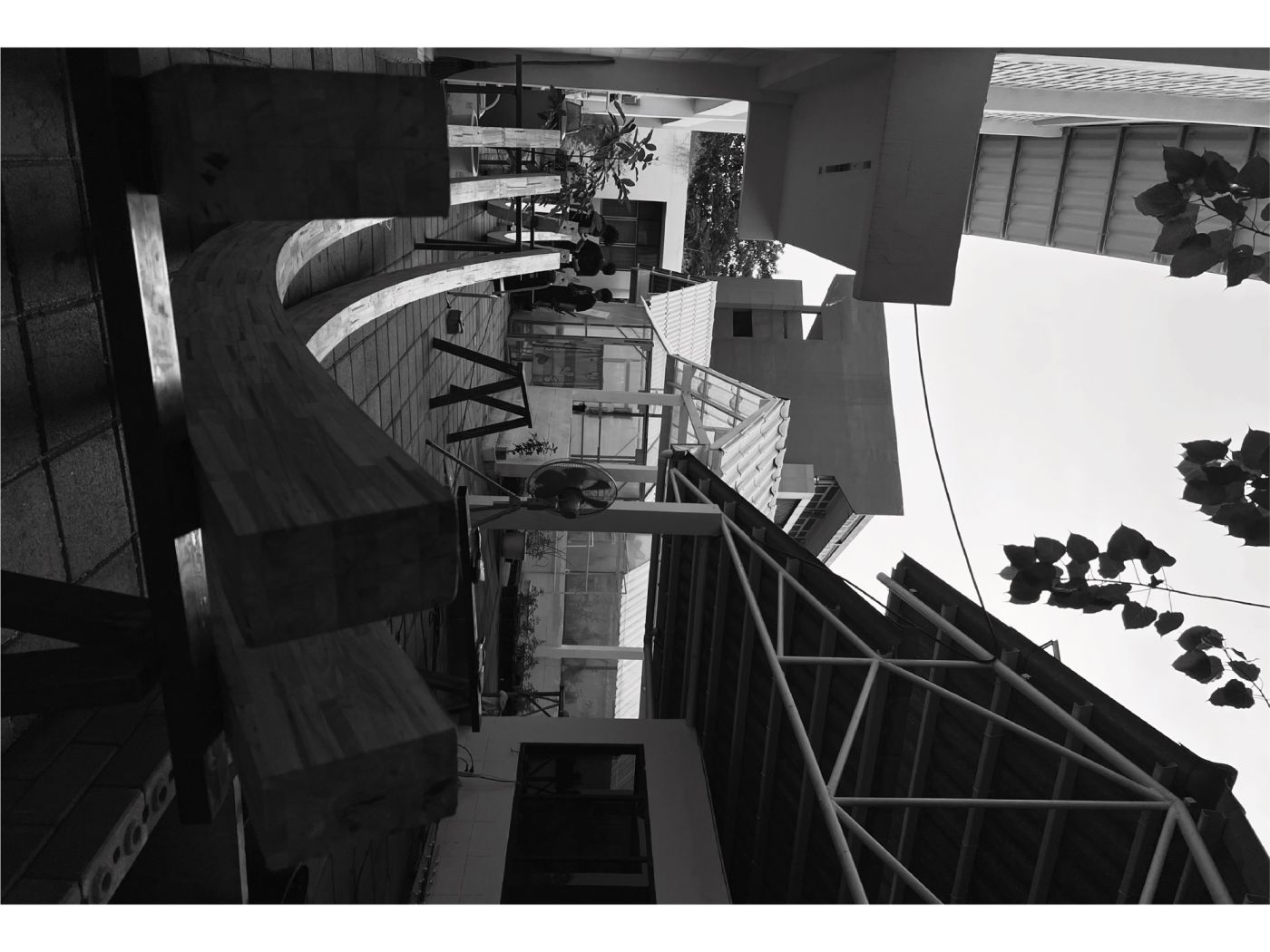
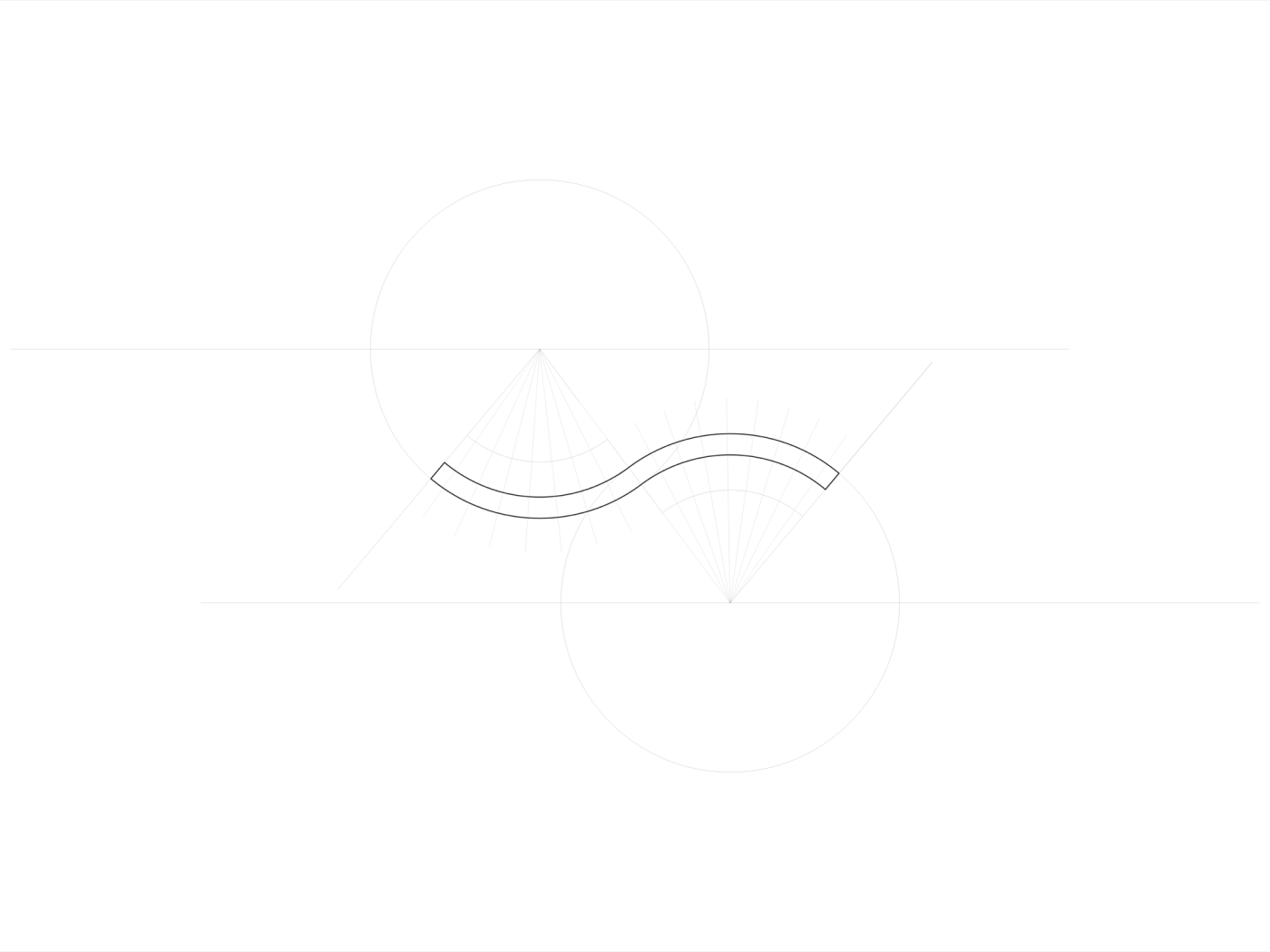
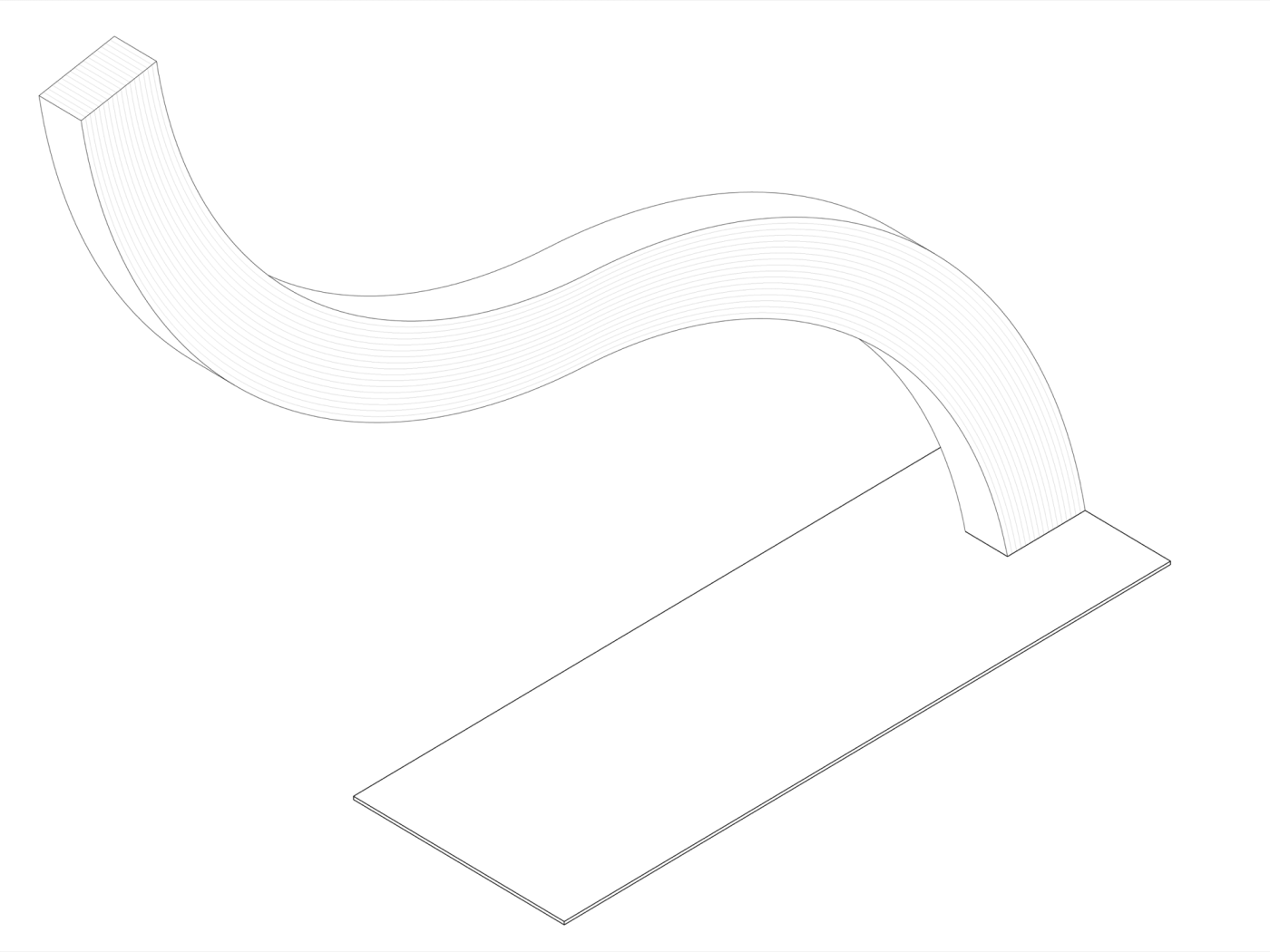
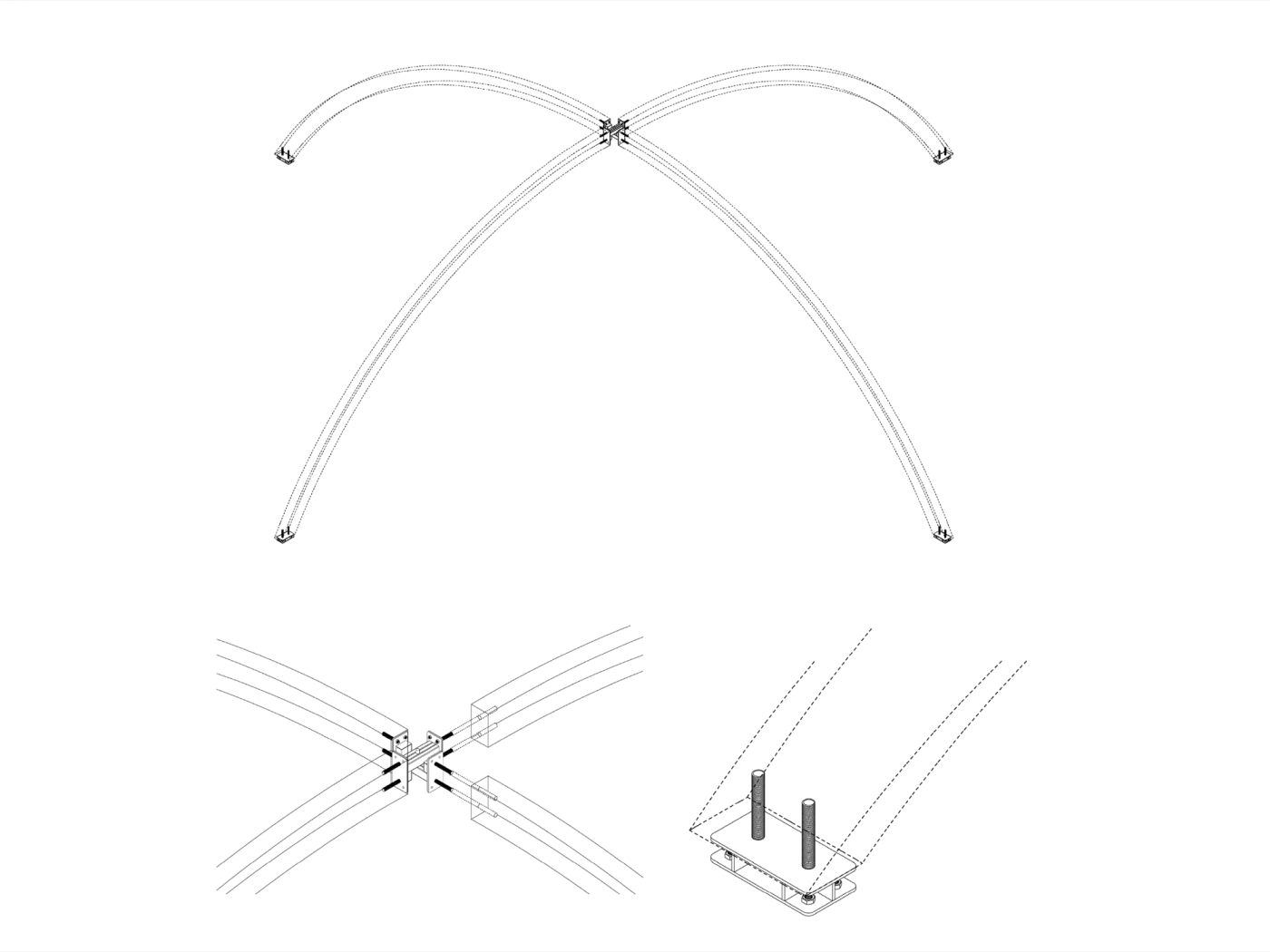
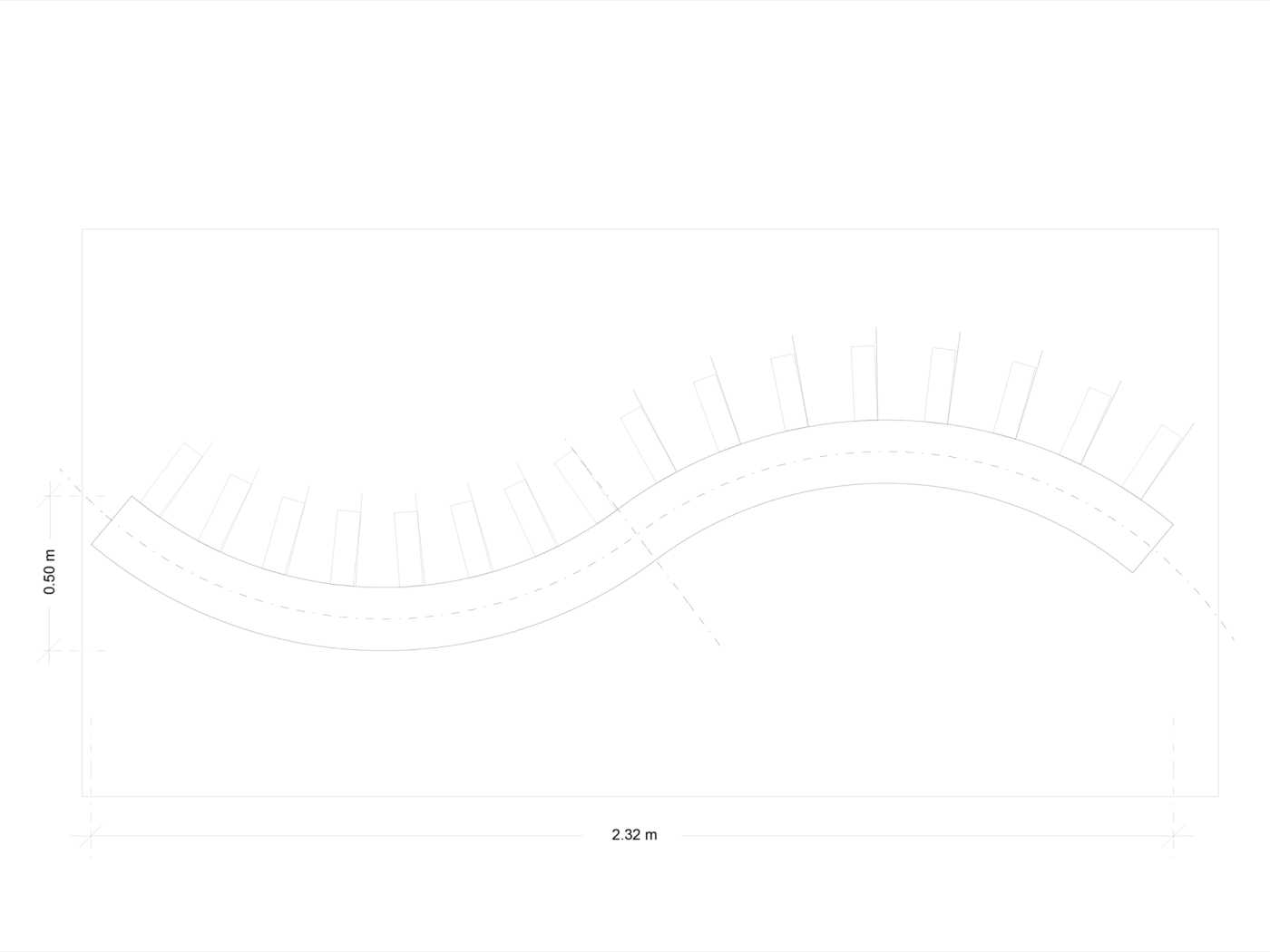
Pliw-Mai demonstrates that sophisticated engineered timber—specifically glued laminated timber (GLULAM)—can be produced in small-scale factories without advanced industrial equipment. The project achieved a crossing segmental arch spanning 10.7 meters (13m curved length) with 20×12cm sections fabricated entirely through manual processes. Building on rubberwood—a byproduct of Thailand's rubber industry—the research developed intermediate-technology protocols for producing structural timber suitable for small public buildings.
The project directly addresses climate-responsive construction by utilizing locally abundant materials with lower embodied carbon than imported engineered timber. Experimentation revealed that reducing lamination thickness from 20mm to 8mm (increasing layers from 7 to 17) dramatically improved formability while maintaining structural integrity, enabling double-curvature forms previously unachievable with standard GLULAM techniques.
- ชนกชนม์ เนวะมาตย์
- รพีพงศ์ ศิรชัยวงค์
- ศศิศ ศิลปทินกร
- ธนดล ลวดลายดี
- พัชรพล เจริญธรรมรักษา
- พัทธวรรณ บุญเกิด
- ภทรพล คูหามงคล
- อาทิตติยา อังครางกูล